

Sugartown Art and Antiques | Antique and Contemporary Fine Art Gallery
Larry Rivers Big B Signs Up Ben Franklin Bicentennial Lithograph in Wood Frame
Larry Rivers Big B Signs Up Ben Franklin Bicentennial Lithograph in Wood Frame
Couldn't load pickup availability
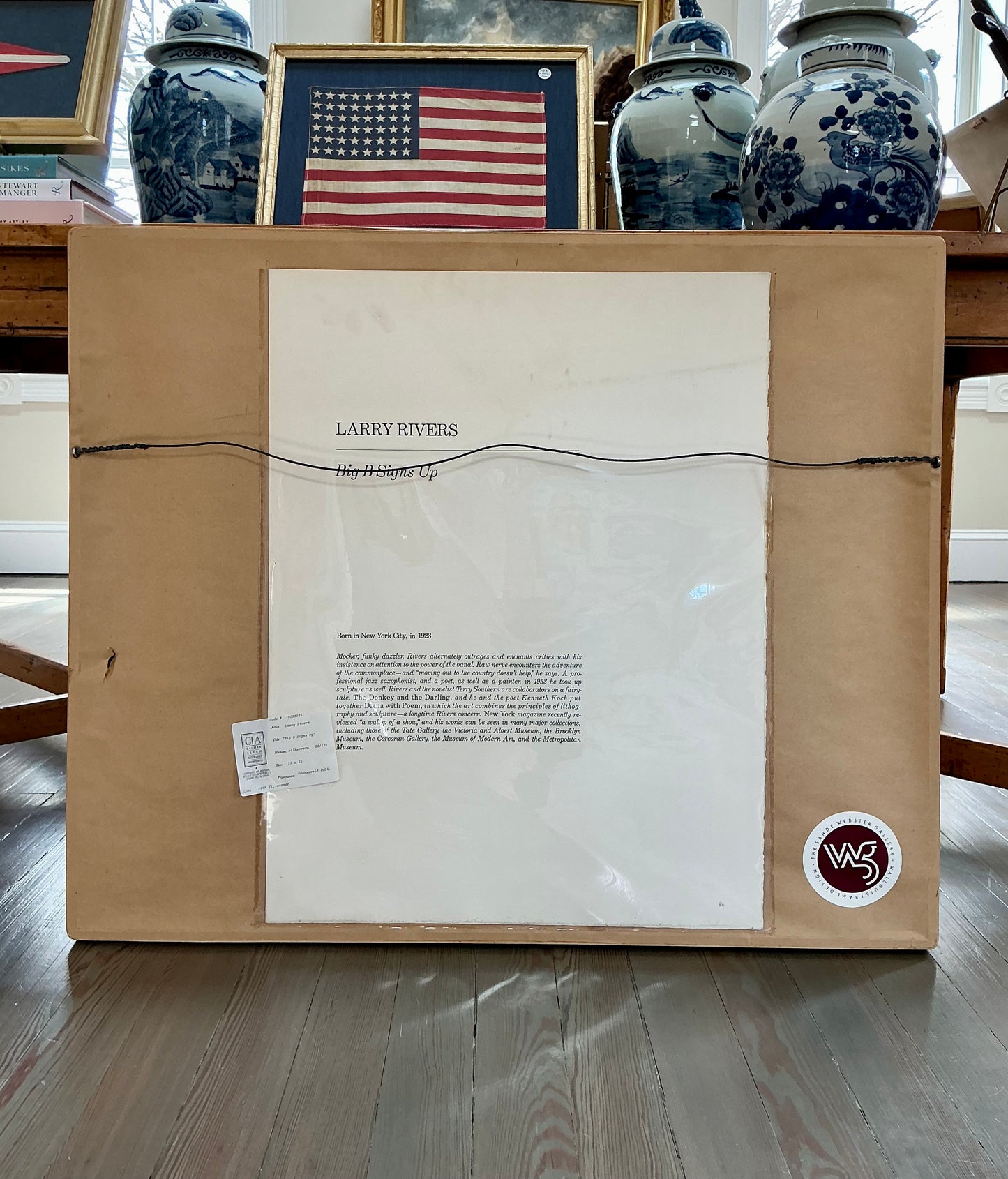
Larry Rivers (American, 1923-2002) lithograph titled Big B Signs Up. This work depicts Benjamin Franklin signing the Declaration of Independence in celebration of the Bicentennial. Dated 1976, signed, and numbered 86 /175. Artwork in contemporary wood frame measures 28.75" x 35.25" Label from the Sande Webster Gallery as well as a label from fine art appraisal firm Galman Lepow Associates. Artwork and frame in very good condition. Frame has light, age appropriate wear. His market has remained steady and relevant in the decades since his death, with strong auction results underscoring continued collector interest—most notably, his painting Africa I (1961–62), which achieved over $2 million at Sotheby’s, setting an auction record for the artist.
Larry Rivers (1923–2002) was an American artist whose work helped bridge Abstract Expressionism and Pop Art, though he never fit neatly into either category. Born Yitzroch Loiza Grossberg in the Bronx, Rivers initially pursued music—studying at Juilliard and playing jazz saxophone—before turning to painting in the late 1940s. That musical background carried into his visual work, which often feels improvisational, layered, and rhythmically composed.
Rivers came up alongside artists like Jackson Pollock and Willem de Kooning, but he resisted the purity and intensity of Abstract Expressionism. Instead, he reintroduced recognizable imagery—figures, historical references, and everyday objects—into his paintings at a time when representation was considered almost taboo. His breakthrough work, Washington Crossing the Delaware (1953), is a loose, irreverent reinterpretation of the iconic historical scene, signaling his interest in blending high culture with a more casual, contemporary sensibility.
Throughout his career, Rivers moved fluidly between painting, sculpture, printmaking, and even performance. His subjects ranged from art history and politics to the female figure and popular culture, often treated with a mix of wit, sensuality, and skepticism. This approach would later influence the development of Pop Art, particularly in its embrace of familiar imagery and cultural commentary.
Rivers exhibited widely, including at the Museum of Modern Art and the Whitney Museum of American Art, and maintained a long, visible presence in the New York art world. His work is held in major public and private collections internationally.
Today, Larry Rivers is remembered as a boundary-pushing figure who challenged the dominant ideas of his time, opening the door for a more inclusive and referential approach to contemporary art.
Share